செவ்வாய், 28 பிப்ரவரி, 2012

TNA plans boycotting UNHRC, requests people to remain ‘calm’

TNA plans boycotting UNHRC, requests people to remain ‘calm’

[TamilNet, Saturday, 25 February 2012, 19:30 GMT]
Reliable sources informed on Saturday that the Tamil National Alliance (TNA) plans issuing a statement on Monday about its non-participation in the UNHRC sessions open in Geneva on that day. The sources also said that the TNA genuinely fears that if the present unstable situation continues, violence could recur and the civilian population could again be the victims. According to thinking in the TNA circles, it is imperative that in the present situation calm should be maintained and nothing should be done which could exacerbate tensions. The reason for TNA boycott is its disappointment in expecting any positive commitment of Sri Lanka at the UNHRC towards addressing the aspirations of Eezham Tamils, despite the TNA’s commitment to solutions within a ‘united and undivided’ Sri Lanka, informed sources said.

A US backed resolution at the UNHRC expects Sri Lanka to commit to a time frame for implementing its LLRC recommendations.

The US thinks that there are some positive recommendations in the LLRC report, even though many Eezham Tamils perceive that the orientation of the LLRC recommendations is structural genocide and annihilation of the identity of the nation of Tamils in the island by 2020.

But even in implementing anything positive towards Tamils, the Sri Lanka State has a notorious reputation for failure to fulfil commitments it makes and for not making public reports of processes, which could hold it accountable, TNA circles point out.

While referring to TNA’s fear about violence coming back due to continued instability, and its advice to people, not to do anything but remain ‘calm’, new generation Tamil politicians in the island asked whether the TNA has tried its maximum in leading a democratic mass struggle of non-cooperation, civil disobedience etc., in the island and in the diaspora, against the real protagonists sabotaging the Tamil cause, before fearing recurrence of violence.

Chronology:

US ‘tables’ Rajapaksa formula while pretending pressure

Feature Article

US ‘tables’ Rajapaksa formula while pretending pressure

[TamilNet, Saturday, 25 February 2012, 02:30 GMT]
Other than the US attempting to ‘steal’ the credit of passing a resolution on Sri Lanka at the March UNHRC sessions in Geneva, there is no difference between what the US ‘proposes’ and what the genocidal Colombo ‘envisages’ for Eezham Tamils, political observers commented on a ‘leaked’ draft of the resolution as well as on statements made by US State Department spokesman Mark Toner on Thursday. Perhaps the only difference the Colombo regime is fussing about is the resolution expecting a time-frame from Sri Lanka to implement the wanting recommendations of the LLRC. The Rajapaksa-regime is not prepared even for that. Despite the US deception on genocide-affected Eezham Tamils, some Tamil politicians in the island, Colombo-based ‘civil society’ and some diaspora lobbyists try to paint a picture that the US ‘pressure’ is bringing in something substantial for Eezham Tamils.

Reminding a Tamil proverb about a person who has bitten dust bragging about his moustache not getting the sand (vizhunthaalum meesaiyil ma'n padavillai), the US and the West that were humiliated in the earlier rounds on Sri Lanka at the UNHRC as well as in the Commonwealth, now try to get the credit of passing a resolution by telling the same of what Rajapaksa has been envisaging for the structural genocide of Eezham Tamils, Tamil political observers in the island said.

The US position on the resolution wants implementation of the LLRC recommendation with a time schedule. The stand of the US also comes out with the mildest possible note on the lacuna in war crimes investigations, while asking Sri Lanka to carry it out internally.

By asking for a time schedule for the implementation of the LLRC, the US indirectly rules out all political solutions in the model appropriate to national questions, because the thrust of the LLRC is to completely annihilate the nation of Eezham Tamils and assimilate it through structural genocide by 2020. The LLRC recommendation has already fixed a time schedule on this aspect that is vital to the genocidal regime in Colombo.

The US stand also closes the topic of international investigations.

Meanwhile, US State Department spokesperson Mark Toner, on Thursday, said that the US has long been publicly supporting Sri Lanka getting enough time and space in coming out with domestic solutions. He also said that if implemented, the LLRC recommendations are capable of bringing in “genuine reconciliation and strengthening of democratic institutions and practices in Sri Lanka”.

Not satisfied with whatever they have hitherto done to Eezham Tamils, ministers of the Rajapaksa regime have called for a mass agitation in the island on Monday against any resolution in the UNHRC. A preparatory show was made on Friday in protesting the removal of the war-crimes-accused Maj Gen (retd) Shavendra Silva from his recent UN appointment on peace keeping.

Doing everything after close consultations and directions from the US, the Sinhala politicians pretend protest to get the best for them out of everything. But, sections of Tamil politicians behave as though whatever the US proposes is also their own political wisdom to profess to Eezham Tamils, observed a new generation Tamil politician in the island.

In adopting this approach, the Tamil lobbyists in the diaspora ultimately find themselves to be only counter-lobbied in the international forums, he further said.

The 19th UN Human Rights Council sessions are to commence on the 27th in Geneva and continue till March 23rd. The 20th Session is to take place from May 30 to 17 June 2012.

Excerpt from February 23 briefing by Mark Toner at the US State Department follow:

QUESTION: Different topic? On Sri Lanka, the Sri Lankan Government has called for protests over what it says is the U.S. position on the UN Human Rights Council. That’s with regard to the events of 2009, the end of the civil war. Does the U.S. have anything to say either about Sri Lanka’s call for protests over this, or more broadly, about the U.S. position on the UN Human Rights Council?

MR. TONER: Well, we think – sure, Shaun. We think we’ve been very consistent in our dialogue with the Government of Sri Lanka regarding the issue of reconciliation and accountability. We long publicly supported the idea of the Government of Sri Lanka having the time and space for this domestic Lessons Learned and Reconciliation Commission to carry out its work, and believed that an action plan would be announced when that report was made public. And then subsequent to the report’s publication, we wanted the Government of Sri Lanka to follow up on some of the recommendations from the report.

Again, we welcome the Lessons Learned and Reconciliation Commission’s report. It was a Sri Lankan undertaking, which includes many strong recommendations that, when implemented, could help improve and contribute to genuine reconciliation and strengthening of democratic institutions and practices in Sri Lanka. But to date, frankly, we’ve not seen a detailed action plan from the Government of Sri Lanka on how it’s going to implement these recommendations. So I think we still encourage the Government of Sri Lanka to move forward to take concrete steps on this implementation plan. And at the same time, we’re working with our partners in Geneva on a resolution within the UNHRC that calls for actions on important steps towards reconciliation. But I think our goal ultimately is the same here: We want to see these recommendations implemented and so that they can help lead towards reconciliation.

QUESTION: Just following up, on the Human Rights Council, in previous years, it’s fallen short regarding Sri Lanka. Is there – how concerted is the effort by the United States? Is there a desire to really pass something in the Human Rights Council on --

MR. TONER: Well, we wouldn’t be pursuing it if there wasn’t a desire. We’re also – obviously continue to be engaged with the Sri Lankan Government. But we’ve long said that we would support local efforts and want to see local efforts to address these issues, but we would also engage international mechanisms if appropriate.

QUESTION: Do you have any comment on the violence in Iraq today?

QUESTION: Can we stay on Sri Lanka?

MR. TONER: Sure.

QUESTION: After the visit of Indian foreign minister to Sri Lanka and then the U.S. diplomats, has there been any --

MR. TONER: Additional follow-up?

QUESTION: -- diplomatic follow-through between U.S. and India on --

MR. TONER: Well, through our Embassy, of course, and I’m sure almost on a daily basis, there is engagement with the Government of Sri Lanka. Maybe not always on this particular issue, but certainly I’m sure this is --

QUESTION: No. After the Indian foreign minister’s visit, did you have anything to do with India?

MR. TONER: I’m not sure. I’ll have to take that question, Tejinder.

QUESTION: Okay.

* * *


Full text of the ‘leaked’ draft resolution follows:

Guided by the Charter of the United Nations, the Universal Declaration of Human Rights, the International Covenants on Human Rights, and other relevant instruments,

Reaffirming that States must ensure that any measure taken to combat terrorism complies with their obligations under international law, in particular international human rights, refugee and humanitarian law, as applicable,

Noting the Report of Sri Lanka’s Lessons Learnt and Reconciliation Commission (LLRC) and its findings and recommendations, and acknowledging its possible contribution to Sri Lanka’s national reconciliation process,

Welcoming the constructive recommendations contained in the LLRC report, including the need to credibly investigate widespread allegations of extra judicial killings and enforced disappearances, de-militarize the north of Sri Lanka, implement impartial land dispute resolution mechanisms, reevaluate detention policies, strengthen formerly independent civil institutions, reach a political settlement involving devolution of power to the provinces, promote and protect the right of freedom of expression for all, and enact rule of law reforms,

Expressing concern that the LLRC report does not adequately address serious allegations of violations of international law, and expressing serious disappointment that the Government of Sri Lanka has not fulfilled its relevant legal obligations and stated commitment to initiate credible and independent investigations and prosecutions of those responsible for such violations,

  1. Calls on the Government of Sri Lanka to implement the constructive recommendations in the LLRC report and additionally to take immediate steps to fulfill its relevant legal obligations and stated commitment to address serious allegations of violations of international law by initiating credible and independent investigations and prosecutions of those responsible for such violations,
  2. Requests that the Government of Sri Lanka present a comprehensive action plan before the 20th session of the Human Rights Council detailing the steps the Government has taken and will take to implement the LLRC recommendations and also to address alleged violations of international law,
  3. Encourages the Office of the High Commissioner for Human Rights and relevant special mandate holders to provide, and the Government of Sri Lanka to accept, advice and technical assistance on implementing those steps.


* * *


In September 2011, Canada also ‘leaked’ a wanting proposal it was sponsoring at the UNHRC session, but it didn't go beyond ‘informal discussions’ outside of the session.

Chronology:


Related Articles:
27.09.11   Inaction on Sri Lanka undermines UN Convention: Canadian for..
22.09.11   Discussions in Geneva show world plunging into ‘State Anarch..


External Links:
U.S. Mission to the UN: HRC Resolution on Sri Lanka Would Help Promote Reconciliation and Accountability

Halt deportations of Tamils, Sri Lanka tortures Tamil deportees: Human Rights Watch

Halt deportations of Tamils, Sri Lanka tortures Tamil deportees: Human Rights Watch

[TamilNet, Saturday, 25 February 2012, 01:26 GMT]
Citing own research and medical verification of rape and torture of recently deported Eezham Tamil asylum seekers from the United Kingdom at the hands of Sri Lankan CID at the airport and at the hands of Sri Lanka Army at various check-posts in the island, the New York based Human Rights Watch (HRW) on Saturday urged the British authorities to immediately suspend further deportations from UK to Sri Lanka. The HRW expressed particular concern about the next scheduled deportation from the United Kingdom of about 100 Tamil asylum seekers, scheduled for February 28, 2012. “The Sri Lankan government has a long record of torture and mistreatment that has not ended with the end of the long war with the LTTE,” said Brad Adams, the UK-based Asia director of the HRW.

Full text of the statement by the HRW follows:

UK: Halt Deportations of Tamils to Sri Lanka
Credible Allegations of Arrest and Torture upon Return

(New York, February 25, 2012) – The United Kingdom should suspend deportations of ethnic Tamil asylum seekers to Sri Lanka and immediately review its policies and information about the country’s rights situation used to assess their claims, Human Rights Watch said today. Research by Human Rights Watch has found that some returned Tamil asylum seekers from the United Kingdom have been subjected to arbitrary arrest and torture upon their return to Sri Lanka.

In recent months the British government has sent Tamil asylum seekers back to Sri Lanka on charter flights. Human Rights Watch expressed particular concern about the next scheduled deportation from the United Kingdom of about 100 Tamil asylum seekers, scheduled for February 28, 2012.

“The British government has an international legal obligation not to deport people who have a credible fear of torture upon return,” said Brad Adams, Asia director at Human Rights Watch. “Convincing reports of arbitrary arrests and torture demand that the UK government suspend returns of rejected Tamil asylum seekers to Sri Lanka until it can fairly and thoroughly assess their individual claims based on up-to-date human rights information on Sri Lanka.”

Human Rights Watch has documented eight recent cases in which people deported to Sri Lanka have faced serious abuses. A Tamil deportee from the United Kingdom, RS (a pseudonym for security reasons), said that army soldiers in Sri Lanka arrested him on December 29, 2011. He alleged that during interrogation he was beaten with batons and burned with cigarettes, and that his head was doused with kerosene. He also said that his head was submerged in a bucket of water, that he was hung upside down, and that hot chilis were placed under his head and chest. He said that as a result of this torture, he confessed to being a member of the separatist Liberation Tigers of Tamil Eelam (LTTE), which were defeated in May 2009. He said that he paid a substantial bribe to escape from detention, and fled back to the United Kingdom, where he has applied for asylum.

DB, a Tamil deported from the United Kingdom in 2011, said that he was arrested at a Sri Lankan army checkpoint on December 10. He alleged that he was forced to strip naked and burned with cigarettes and beaten until he agreed to sign a document in Sinhala. He said the soldiers told him he had to work as an informer for the army to identify former LTTE cadres. Like RS, he said he escaped detention after a family member paid a bribe for his release, then secured false documents to return to the United Kingdom, where he has again applied for asylum status.

Another 2011 deportee, AH, alleges that he was arrested by the police Criminal Investigation Department (CID) soon after arriving in Colombo, Sri Lanka’s capital. He said that he was stripped naked and was beaten and tortured until a family member paid a bribe for his release.

Human Rights Watch has also documented cases of Tamil deportees who alleged to have been subjected to rape as a form of torture upon their return to Sri Lanka. In December 2010, CB was arrested at the Colombo airport on his return and was detained for a month by the CID. He said that during this time he was beaten with metal rods and raped four or five times by two men. As he described it, one man would hold him down while the other raped him.

BK, a Tamil woman, alleges that she was arrested at Colombo airport by the CID on her return in April 2010 and kept in detention. She says was raped by several men many times during the course of her detention. She described profuse bleeding as a result of these rapes. Both CB and BK managed to secure their release after relatives intervened to bribe the officials holding them. Both fled Sri Lanka and are seeking asylum in the United Kingdom.

Human Rights Watch has obtained medical evidence supporting each of the above claims of torture.

Asylum tribunals in the United Kingdom have recently concluded that the lack of an official identification card is not a risk factor for returnees. However, in two cases returnees alleged that they were specifically targeted because they did not possess the required IDs.

At a parliamentary debate on Sri Lanka on February 22, Foreign and Commonwealth Office Minister Alexander Burt said: “We are aware of media allegations that returnees are being abused. All have been investigated by the high commission, and no evidence has been found to substantiate any of them.”

Human Rights Watch and others have learned that returnees are met at the Colombo airport by UK embassy staff and given a document with the contact information for the embassy. British officials have stated that they do not have the capacity to monitor the safety of returnees and that returnees may fear retaliation from the Sri Lankan government if they make contact with the UK embassy.

“The United Kingdom and other countries considering the claims of Tamil asylum seekers need to recognize the reality of what may await them on return,” Adams said. “Meeting returnees at the airport and giving them a phone number has not prevented them from being wrongfully arrested and mistreated. This should come as no surprise since abuses against Tamils suspected of links to the LTTE have long been recorded in official UK documents.”

The UK Border Agency’s Operational Guidance Note on Sri Lanka, last updated in December, acknowledges that torture is widespread in Sri Lanka: “The UN Committee Against Torture (UNCAT) stated that they remain seriously concerned about the continued and consistent allegations of widespread use of torture and other cruel, inhuman or degrading treatment of suspects in police custody, especially to extract confessions or information to be used in criminal proceedings. The Committee is further concerned at reports that suggest that torture and ill-treatment perpetrated by state actors, both the military and the police, have continued in many parts of the country after the conflict ended in May 2009 and is still occurring in 2011. In 2011 the UNCAT issued a scathing statement about Sri Lanka in which it called for an end to the practice.”

However, the Operational Guidance Note in section 5 on “Returns” makes no mention of Tamil ethnicity as a factor to consider.

The United Kingdom is a party to the Convention against Torture and Other Cruel, Inhuman or Degrading Treatment or Punishment, which states in article 3 that no state “shall expel, return (‘refouler’) or extradite a person to another State where there are substantial grounds for believing that he would be in danger of being subjected to torture.” In making such determinations, the authorities “shall take into account all relevant considerations including, where applicable, the existence in the State concerned of a consistent pattern of gross, flagrant or mass violations of human rights.”

Human Rights Watch called for the Sri Lankan government to stop targeting Tamil returnees and end the use of torture and other ill-treatment in custody. Sri Lanka is also a party to the Convention against Torture.

“The Sri Lankan government has a long record of torture and mistreatment that has not ended with the end of the long war with the LTTE,” Adams said. “The government needs to take serious and public measures to end these cruel practices.”

Related Articles:
03.02.12   Tamil woman's death in Norway bares plight of a Nation depri..
21.12.11   Intelligence agencies on man-hunt for genocide witnesses
16.12.11   UK Courts refuse stay on deportation, TAG appeals to Europea..

UNHRC sessions open on Monday amidst US–Sri Lanka gambits

UNHRC sessions open on Monday amidst US–Sri Lanka gambits

[TamilNet, Friday, 24 February 2012, 07:16 GMT]
On Tuesday, Genocidal Sri Lanka’s foreign minister GL Peiris and its ‘socialist’ ploy Tamara Kunanayakam, SL permanent representative in Geneva, painted a picture of victimisation by the USA, to the 47 UNHRC member states meeting in Geneva for two weeks from Monday. Sri Lanka that conducted the genocidal war and carries out structural genocide labelled as ‘reconciliation’– both primarily architected by the USA– now says that it has no secret deal with the USA on any resolution in the sessions and urges the member states to vote against even the mildest move of the USA proposing Sri Lanka to conduct its own investigations on the war crimes, recommended by its own LLRC. On the same day, military delegations of Iran, Russia and Bangladesh visited Jaffna, and a few days earlier Rajapaksa secretly inaugurated a China project in Jaffna. India maintains an eerie silence.

USA, Russia, China, India and Norway are among the 47 member states of the UNHRC. Sri Lanka has fielded an army of diplomats to canvass among the member states to once again come out scot-free without any resolution passed against it.

The human rights paradigm becomes a laughing stock in the hands of the very states and powers that breach it, for it is not theoretically designed to address the collective rights of affected nations and it is merely seen as an issue for opportunistic alignments among states, observers said.

The funniest part in the case of Sri Lanka is that when the victims are gagged in the island, and when arrangements are engineered by Sri Lanka-abetters to lure Tamil leadership itself to sit on any uprisings of Tamils in the diaspora and in Tamil Nadu, the oppressor regime in Colombo has called for an uprising of the Sinhala masses to protest against any international move bringing in justice to the victims.

SL minister Wimal Weerawansa told media in Colombo on Thursday that ‘nationwide demonstrations’ would be held in the island on Monday when the UNHRC sessions opens in Geneva.

Political observers are of the opinion that given the priority of targets in the Islamic world and the urgency of alignments to address them, the topic of Sri Lanka would be deferred to September after some hoodwink muscle flexes to fathom the strength of international alignments.

Eezham Tamils have become unbelievers nowadays to the extent that many of them are unable to believe what even the TNA leadership is repeatedly telling them where it is heading for.

Unless the people in the island, in the diaspora and in Tamil Nadu take up the matter into their hands and create a situation, nothing is going to happen. First of all, people have to understand what elements are sitting on their uprising and what engineering takes place in grooming inner contradictions aiming at isolating the demand for righteous independence, which only could bring in ultimate justice.

The March session will not even serve an eye-opener, if Eezham Tamils yield into naïve campaigns, political observers in the diaspora said.

* * *


A few weeks ago, visiting US officials privately told the civil society in Jaffna not to expect anything from the UNHRC session, as there was no pressure from the victims, as there is nothing in the US agenda to come out with international investigation against Sri Lanka and as many member states in the UNHRC should be counted out of any move against Sri Lanka.

Diplomatic circles tell that top US officials subsequently visited Colombo had a very cordial deal with the Rajapaksa regime.

The US subsequently came out with a mild proposal of asking Sri Lanka to implement the LLRC recommendations, which has only set a timetable to complete structural genocide of the nation of Eezham Tamils, and to initiate internal investigations on the war crimes, which no regime knowingly committed and committing genocide would do.

The Tamil National Alliance (TNA) reflected the Indo-US thinking of subtly bailing out Rajapaksa, when its leaders spoke on Cambodian analogy of delayed war crimes investigations and about giving time to Rajapaksa to implement LLRC recommendations, while praising the regime’s ‘rehabilitation’ of the former LTTE cadres. Beyond the 13th Amendment hoodwink that is already in the SL constitution, TNA’s political agenda is nondescript.

* * *


Yet, on Tuesday, after consultations with GL Peiris, SL Ambassador in Geneva, Tamara Kunanayakam, wrote to the member states of the UNHRC that it is a false impression that Sri Lanka is working with the USA on a resolution in the UNHRC.

Responding to an email sent to member states from the US mission to the UN in Geneva, Tamara said, “This e-mail creates the impression that diplomatic officials of the U.S. have been in close contact with the Government of Sri Lanka, as well as this Mission, to work, "collaboratively on issues of accountability (in Sri Lanka) and the implementation of the Lessons Learnt and Reconciliation Commission’s Report.”

“It obliquely canvasses the position of a co-sponsorship of a Resolution and conveys a false impression that Sri Lanka is working with the United States on this Resolution," Tamara’s response said, adding, “Sri Lanka categorically states that at no time has the Government or its Mission in Geneva, ever worked with representatives of the United States on any Resolution on whatsoever.”

According to her statement it is “counterproductive to bring any resolution” barely two months after the LLRC report and when implementation of it is the context.

The statement also accused the US email as distortion by interested parties pursuing some parallel agenda seeking to achieve some collateral gain, given Sri Lanka’s commitment to engage constructively with its partners.”

“A domestic mechanism must be given the time, space and the necessary impetus to achieve its objectives,” is genocidal Sri Lanka’s position, and every one knows what are those objectives.

The Rajapaksa regime cannot do and will not do anything other than structural genocide of Eezham Tamils is arrogantly and repeatedly demonstrated.

The SL delegation headed by GL Peiris, includes other SL ministers Nimal Siripala de Silva, Mahinda Samarasinghe, who is in charge of the human rights portfolio and Douglas Devananda, MP Sajin de Vass Gunawardena, Ambassador Kunanayakam, Additional Secretary External Affairs Kshenuka Senewiratne and SL presidential spokesman Bandula Jayasekera.

After causing the disappearance of 140,000 Tamil civilians in the Vanni war alone, the SL state and some media in Colombo try to project the quest of justice of the Eezham Tamil nation as an agenda of the ‘LTTE rump’.

According to citations of the SL delegation by Colombo’s The Island, the US-led move “would only help the LTTE rump, operating in the US and other parts of the world.” SL officials at Geneva also accused the UK, alleging that a group of British parliamentarians, too, was campaigning against Sri Lanka at the behest of the LTTE.

Chronology:


External Links:
The Island: SL writes to UNHRC member states to counter US claims

Channel-4 wins trophy for Sri Lanka's war-crimes documentary

Channel-4 wins trophy for Sri Lanka's war-crimes documentary

[TamilNet, Friday, 24 February 2012, 05:51 GMT]
ITN for Channel 4 scooped the trophy for best international coverage for the documentary Sri Lanka's Killing Fields at the prestigious Royal Television Society (RTS) awards in UK, BBC reported. Sri Lanka's Killing Fields, a special one-hour investigation which features devastating video evidence of war crimes and crimes against humanity committed by Sri Lankan government forces and the Tamil Tigers, was first broadcast on 2nd December 2010, edited versions were replayed on 4th and 5th December during Sri Lanka's President Rajapaksa's visit to London.

"The footage screened by Channel 4 ranks among the most horrific yet shown on British television. Naked prisoners shot in the head; the dead bodies of women who had been raped, dumped on a truck; the immediate aftermath of a shell landing on a hospital – images caught on mobile phones of the atrocities committed by government soldiers in the final months of Sri Lanka's brutal civil war," UK's popular daily The Guardian commented on the video.

The film, directed by Callum Macrae, provides powerful evidence - including photographic stills, official Sri Lankan army video footage and satellite imagery - which contradicts the Sri Lankan government's claims of a policy of ‘Zero Civilian Casualties'. The film raised serious questions about the failures of the international community to intervene and prevent the deaths of up to forty thousand people and lends new urgency to the UN-appointed panel of expert's call for an international inquiry to be mounted.

The UN investigator, South African law professor Christof Heyns said of the footage first shown by Channel 4 News: "What is reflected in the extended video are crimes of the highest order - definitive war crimes...The overall conclusion reached by the experts is that the video is authentic and the events reflected in the video footage occurred as depicted," Channel 4 reported.

Chronology:


External Links:
BBC: Newsnight wins programme of the year award

R.T.I.Act gives remedy

சொல்கிறார்கள்                                                                                                                               

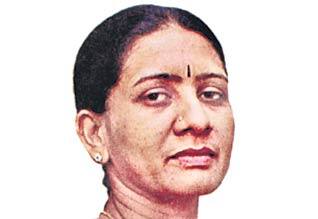
ஆர்.டி.ஐ., மூலம் பல நன்மைகள் பெற்றிருக்கும் பூமா: ஊத்துக்கோட்டை அருகில், அனந்தேரி கிராமம் தான் என் சொந்த ஊர். பிளஸ் 2 வரை தான் படித்திருக்கிறேன். என் கணவர், தனியார் நிறுவனத்தில், உயர் பொறுப்பில் இருப்பதால், அவரின் வேலை காரணமாக இந்தியாவின் பல மாநிலங்களில் இருந்திருக்கிறேன். இந்த அனுபவங்கள் தான், அரசு அதிகாரிகள், போலீஸ் துறை என்று, அனைவரிடமும் தயக்கம் இல்லாமல் என்னை அணுக வைக்கிறது.இரண்டு ஆண்டுகளுக்கு முன், ரயிலில், ஆந்திராவிற்கு சுற்றுலா சென்ற போது, எங்களுக்கு ஒதுக்கப்பட்ட இடத்தில், வேறு சிலர் அமர்ந்திருந்தனர். இது குறித்து, டி.டி.ஆரிடம் வாக்குவாதத்தில் ஈடுபட்டும், எந்த உபயோகமும் இல்லை. இது குறித்து, ரயில்வே துறை உயர் அதிகாரிகளுக்கு, அனைத்து விஷயங்களையும் குறிப்பிட்டு, ஆர்.டி.ஐ., மூலம் கடிதம் போட்டோம்.அந்த, டி.டி.ஆருக்கு தண்டனையாக, அவரின் ஊதிய உயர்வை, ரயில்வே நிர்வாகம் மூன்றாண்டுகளுக்கு நிறுத்தி வைத்தது. இந்த தீர்ப்பை, ஒரு குடிமகனின் வெற்றியாக நாங்கள் கொண்டாடினோம்.இந்த நிகழ்ச்சிக்குப் பின், சட்டத்தின் மீது எனக்கு நம்பிக்கை பல மடங்கு கூடிவிட்டது. கடந்த, 15 ஆண்டுகளுக்கு மேல் இழுத்தடிக்கப்பட்ட எனக்குத் தெரிந்தவரின் நிலப் பட்டா பிரச்னைக்கும், ஆர்.டி.ஐ., மூலம் பலன் கிடைத்தது. இதை நண்பர்கள், உறவினர்களிடமும் பகிர்ந்து, அவர்களுக்கும், ஆர்.டி.ஐ.,யின் மேல் நம்பிக்கை ஏற்படுத்தியுள்ளேன்.பாதாள சாக்கடை, குப்பை கான்ட்ராக்ட், மருத்துவமனை குறைபாடுகள் என, எந்தப் பிரச்னையாக இருந்தாலும், சம்பந்தப்பட்ட அதிகாரிகளிடம் முறையிட்டும் பதில் இல்லையெனில், அப்பிரச்னை குறித்து, நமக்குத் தெரிய வேண்டிய விவரங்களை கேள்விகளாக எழுதி, 10 ரூபாய்க்கான கோர்ட் முத்திரை வில்லை ஒட்டி, அருகிலுள்ள தகவல் அறியும் உரிமைச் சட்ட அலுவலகத்திற்கு அனுப்பினால், அடுத்த 10 நாட்களுக்குள், சரியான காரணங்களுடன் பதில் கிடைத்துவிடும்.தவறு செய்தவர், ஐ.ஏ.எஸ்., அதிகாரியாகவே இருந்தாலும், உரிய தண்டனை கிடைக்கும்.

pesum padam


திங்கள், 27 பிப்ரவரி, 2012

Unnoticed sport:

சொல்கிறார்கள்                                                                                                                               


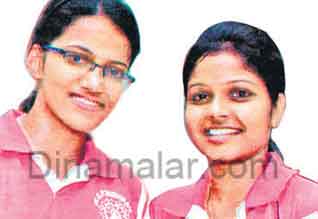
டேபிள் டென்னிஸ் விளையாட்டில் அசத்தும் ஐஸ்வர்யா, கிருத்திகா ஜோடி: மத்த விளையாட்டு மாதிரியில்ல இந்த டேபிள் டென்னிஸ்... ரொம்ப வேகமான விளையாட்டு. உலக அளவில் மிக முக்கியமான விளையாட்டுகளில் முதல் சில வரிசைக்குள் வரக்கூடிய விளையாட்டு இது. சில வருஷங்களுக்கு முன் வரை, இந்தியாவில் பெரிய அள வில் கவனம் பெறாத விளையாட்டாகவே இது இருந்தது."முதலில் பேட்டை பிடிக்கும்போது, தேசிய அள வுக்கு முன்னேறுவேன்னு தெரியாது; இந்தியா முழுக்க நடந்த போட்டிகளில் கலந்துகிட்டு ஜெயிச்சாச்சு.காஷ்மீர், கோல்கட்டா, லக்னோ என, நாட்டின் முக்கால்வாசி இடங்களில் நடந்த போட்டிகளில் தமிழ்நாட்டு ஜூனியர் ரேங்கில் கலந்துகிட்டது பெருமையா இருந்தது. டேபிள் டென்னிஸ் திறமையை வைத்து, எம்.ஓ.பி., வைஷ்ணவா கல்லூரியில், ஒரு பெண்ணிற்கு இலவசமாக சீட் கொடுத்திருக்கின்றனர் என்றால், அது, என் ஜோடி கிருத்திக்கு தான். பள்ளி அளவில் தொடங்கி, தேசிய அளவில் பல போட்டிகளில் அவளும் கலந்துகிட்டு, இந்தியாவின் மூலை முடுக்கெல்லாம் ஆடியிருக்கா; எஸ்.ஜி.எப்.ஐ., நடத்திய போட்டியில், இரண்டு தங்கம், வெள்ளி ஒரே சமயத்தில் வாங்கியிருக்கா; அதேபோல், நானும் இந்திய அளவில் தங்கம் வென்றுள்ளேன். நாங்க கலந்துகிட்ட போட்டிகளில் ஜெயிக்காமல் திரும்பியதே கிடையாது; மிக அதிக செலவு பிடிக்கும் இந்த டேபிள் டென்னிசில் பங்கேற்கிறதே பெரிய விஷயம். பெரிய நிறுவனங்களின் நிதியுதவி இல்லாம இந்த விளையாட்டில் எளிதாக நுழைவது கடினம்.ஓரளவுக்கு வசதி வாய்ப்புகளோடு வளர்ந்து வர, இந்த விளையாட்டுக்கு அரசு கொடுத்திருக்கும் ஆதரவும் ஒரு காரணம்.

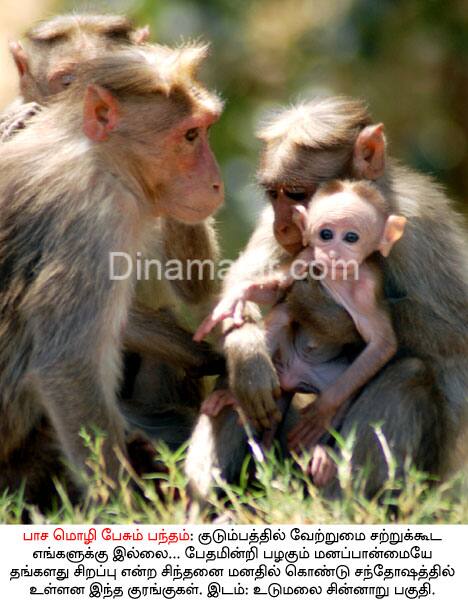
dinamalar, pesum padam - monkey family in happy mood


Photoon: greens: பச்சை நிறம் தோன்றுதையே!

ஃபோட்டூன்
பச்சை நிறம் தோன்றுதையே!

பார்க்கும் மரங்களெல்லாம் நந்தலாலா.... நின்றன்பச்சை நிறம் தோன்றுதையே நந்தலாலா..அரசியல் லாபத்துக்காகபசுமை மரத்தை வெட்டிச் சாய்த்தவர்கள் இங்கேயுண்டு!நாங்கள்...லாப அரசியலுக்காகபச்சைக் கன்று நட்டோம்! பசுமைப் புரட்சி செய்தோம்!!
 - தினமணி