The occupying Sri Lanka Army was stationed at Mailampaa-ve'li village, which is situated 8 km north of Batticaloa city along Batticaloa - Vaazhaichcheanai highway (A4). The SL military vacated from the private lands three years ago. After that, the occupying Sinhala police has put up a post at the locality and the landowner is still reluctant of removing a Buddha statue which was left behind by the Sinhala military.The SLA was occupying the said lands at Mailampaa-ve'li lands for 25 years. SL Police doesn't seem to use the small temple, which is found in the abandoned state. However, the ‘foremost place to Buddhism’ clause in the SL constitution would be used against the landowner if the structure is removed.
A landowner from another locality in Batticaloa told TamilNet that he was adviced by the SL police not to remove the Buddha statue and the Bo tree planed by the SL military.
Buddha statue left behind by SL military at private lands in Mayilampaa-ve'li in Batticaloa
Without establishing a political right that protects the landowners, they are reluctant to remove such structures, political observers in Batticaloa said.
In the meantime, extremist Sinhala monk based in Batticaloa has been trying to revive the Buddha structures left behind by the SL military, they said.
Although the SL Constitution attempts to project all religions as having equal status, the constitutional provision of ‘foremost place’ and various other arrangements such as the SL police having a special division to protect the Buddhism under the guidance of SL Ministry of Buddha Sasana, have made it a crime if anyone attempts to peacefully dismantle even a Buddha statue in the occupied country of Eezham Tamils
Article 9 (chapter II) of the current Sri Lankan constitution promulgated in 1978 says "The Republic of Sri Lanka shall give to Buddhism the foremost place and accordingly it shall be the duty of the State to protect and foster the Buddha Sasana.."
Eezham Tamils say that this Article constitutes a particular obstacle in negotiating any degree of regional autonomy with the genocidal State of Sri Lanka because it is an 'entrenched' section of the constitution. Article 9 can be amended or repealed only with the support of two thirds of all the members of the SL Parliament and only if such amendment or repeal is thereafter approved by the people in an island-wide referendum.
The proposals for new constitution are also not going to change this reality and federalism is not possible under the genocidal configuration of the Sri Lankan system. The fundamental genocidal character will continue to exist despite cosmetic reforms.
நிறைமொழி மாந்தர் பெருமை நிலத்து மறைமொழி காட்டி விடும்.
தமிழ்ப்போராளி
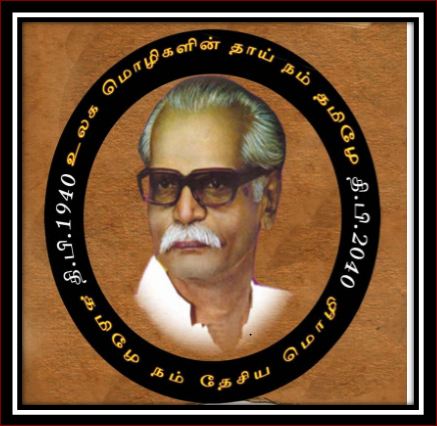
பேராசிரியர் சி.இலக்குவனார்
108ஆவது பிறந்தநாள் பெருமங்கலம்
கார்த்திகை 01, 2048 / நவம்பர் 11, 2017 காலை 9.00
இலக்குவனார் இல்லம் முன்பு
4ஆவது நிறுத்தம், திருநகர், மதுரை 625006
9 ஆம் வகுப்பில் பள்ளி அளவில்
முதல் 10 இடங்கள் பெற்று 10 ஆம் வகுப்பு பயிலும் மாணவ மாணாக்கியருக்கு
அவர்களை ஊக்கப்படுத்தும் வகையில் நூல்கள் பரிசாக வழங்கப்பெறுகின்றன.
Jaffna students demand US and UN agenda-setters to declare PTA detainees as political prisoners
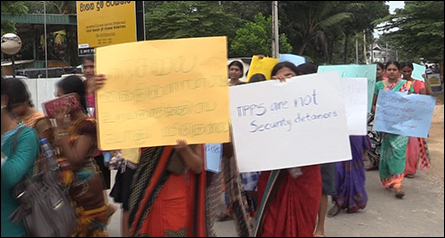
[TamilNet, Tuesday, 14 November 2017, 23:44 GMT] More than 1,000 Tamil students from across the faculties of Jaffna University as well as the students from the College of Education, Jaffna Technical College and High Tech institute took to the streets in Jaffna on Tuesday demanding the main intervening actors of the International Establishment to recognise the Tamil prisoners detained under the so-called Prevention of Terrorism Act as Political Prisoners. They handed over open and urgent appeals addressed to UN High Commissioner for Human Rights, the President of UNHRC and to the US Permanent Mission for UN in Geneva, which has been behind the drafting of the ‘consensus’ resolution with the SL State in Geneva Human Rights Council in 2015 and with postponing a final evaluation by two more years in 2017. The student leaders handed over the appeals through the UN Residential Office in Jaffna and the American Corner in the city.
The American Corner was initially reluctant to receive the appeal, but later received the document, the student leaders said.
Arguing that the self-determination conflict and the war between the LTTE and the GoSL in the island were of international character according to Geneva Conventions’ Additional Protocol I, the student leaders argued that all Tamil Prisoners of War should not be dealt with criminal procedures by the SL State. However, the SL State which violates Tamils self-determination through 6th Amendment and which has not ratified the Additional Protocol I of the Geneva Convention, doesn’t even recognise the Tamil detainees and convicted prisoners as political prisoners.
The student leaders pointed out the culpability and the responsibility on the part of the UN mechanism in Geneva and the US Establishment for the turn of affairs in the island that have deprived Tamils of their rights and freedoms.
The UN failed on its Right to Protect (R2P) obligations in 2009 and the US Establishment, which intervened during the times of war, peace and post-war with its strategic interest in mind, has behaved with lopsided morality towards Eezham Tamils, the appeal implies.
The US Establishment is committing the same ‘mistake’ as it did in 2005 immediately after the GoSL and LTTE signed the agreement on Post-Tsunami Operational Management Structure (P-TOMS), the appeal of Jaffna University Student Union argues.
The US position in 2005 caused the P-TOMS to be eventually scuttled by the SL Supreme Court.
Similarly, the US role in post-2009 scenario is seeking to impose a victor's peace in the island rather than a negotiated peace for Tamils, the appeal said demanding the US Human Rights mission in Geneva in particular to recognise PTA detainees as political prisoners.
The appeal also condemned the use of the term ‘security detainees’ by UN Human Rights High Commissioner Prince Zeid bin Ra'ad towards Tamil political prisoners.
Open appeal to UN Human Rights High Commissioner, the UN Human Rights Council and to the USA, the lead sponsor of consensus resolution on Sri Lanka
We, the student community of Jaffna University, are writing this urgent appeal on behalf of the Tamil political prisoners and their families.
This open appeal is addressed to UN High Commissioner for Human Rights Zeid Ra’ad Al Hussein, President of the UN Human Rights Council (11th Cycle) Joaquín Alexander Maza Martelli and to the US Mission Chargé d’Affaires in Geneva Theodore Allegra.
Copies of this appeal are being forwarded to Sri Lankan President Maithiriapala Sirisena, Prime Minister Ranil Wickramasinghe, Chairperson of the Office for National Unity and Reconciliation (ONUR) Chandrika Bandaranaike Kumaratunge, Opposition Leader R. Sampanthan and Northern Provincial Council Chief Minister C.V. Wigneswaran.
Dear Sir/Madam,
At least 132 Tamil political prisoners are languishing in the prisons of Sri Lankan State across the island. Many of them have been detained for years without trial.
A fast-unto-death campaign waged by three Tamil political prisoners at Anuradhapura prison was called off after the student community of Jaffna University intervened and took the responsibility of addressing their struggle to the relevant international and domestic actors.
We urge the UN Human Rights mechanism in Geneva and the United States of America (USA), the main co-sponsor of Sri Lanka Resolution in the UN Human Rights Council, to recognise the Tamil detainees imprisoned under the Prevention of Terrorism Act (PTA) in Sri Lanka as political prisoners and to impress upon the Sri Lankan State to release the political prisoners through a principled political decision.
The raisons d'êtres for directing our appeal to you are based on the following four categories of arguments:
1. Tamil political prisoners should be a matter of international legal concern
Since 1972, the Sri Lankan State-building in the island has been a discourse dominated by the Sinhala ethnocracy. The state-formation in the island lacked a democratic Tamil mandate. It was largely a unilateral process promulgated amidst Tamil boycott in the North-East.
All those who opposed the ethnocratic State-formation by peaceful means as well as by other means came to be regarded as the enemies of the State and subjected to persecution and prosecution by the Sri Lankan judiciary.
The Welikade prison massacre that took place during the 1983 Black July anti-Tamil pogrom was such an act of persecution.
The underlying cause behind the Tamil struggle has always been based upon Tamils' articulation of their right to self-determination.
The late leader of Tamils S.J.V Chelvanayakam had consistently articulated Tamils’ right to self-determination in the parliaments of Ceylon and Sri Lanka until his demise in 1977.
However, since August 1983, this right has been constitutionally denied to Tamils by through the 6th Amendment to the Sri Lankan constitution. This is a violation of the UN Charter and fundamental human rights.
An armed conflict arose as the last resort means of advancing the right to self-determination struggle against a State that imposed upon them a colonial domination and deployed an ethnic military. The war that followed should therefore be considered an international conflict according to the Additional Protocol I of Geneva Conventions (GC).
The Amnesty International and a range of other human rights watchdogs have referred to Liberation Tigers of Tamil Eelam (LTTE) as a party having accepted in writing its commitment to the GC together with its Additional Protocols I and II in February 1988.
As a party to a self-determination conflict, confronting colonial conditions and facing a racial war, the Eelam War, as it came to be called by the Colombo press was an international conflict.
And, by having accepted the GC and its Additional Protocols, the Tamil side has fulfilled its basic obligations to assert the international legal framework giving Prisoners of War (POW) status in an armed conflict.
Both the parties have also exchanged POWs during the war through the facilitation of the ICRC.
It is obvious that the Sri Lankan State has been refusing to recognise the status of POWs or political prisoners to Tamil detainees held under the so-called Prevention of Terrorism Act (PTA).
Obviously, the Sri Lankan State, which has not ratified the Additional Protocol I and II, would not accord POW status to former LTTE members or those who are alleged of LTTE affiliation.
Since the LTTE has been decimated in the war and doesn't seem to exist anymore as a de-facto entity, its POWs have been left orphaned.
The only ones representing the PTA detainees at the moment are their families and relatives and the larger community of Tamils.
Since the Tamil political representatives have failed to represent their case at the international fora, the student community at Jaffna University has come forward to take up the matter, especially after witnessing the outcry of the Tamil prisoners and their families.
Even though the international community has failed to accord proper status to PTA-detainees as POWs under the international legal framework, the international community has a moral-bound duty to demand the Sri Lankan State to recognise them at least as political prisoners.
2. UN Responsibility
The United Nations pulled out of Vanni mainland when its presence was much needed during the height of the war in September 2008.
After the genocidal end of the war, Tamils have been seeking international investigations.
Such an investigation has not materialised so far due to the conduct of the United Nations under its previous General Secretary Ban Ki-moon.
However, the UN mechanism has admitted its failure in responding to the war in 2009. This is an admittance of the failure of applying the Right to Protect (R2P) doctrine.
The “Human Rights up Front” (HrUF) launched in December 2013 initiative was based on the lessons learnt from the UN failure in addressing the humanitarian tragedy in the island of Sri Lanka.
In February 2015, democratically elected Northern Provincial Council passed a resolution seeking international investigation on the allegation of genocide. The call was also citing the findings of an independent international opinion tribunal known as the People’s Tribunal on Sri Lanka (December 2013).
The UN Human Rights Council only managed to carry out a scope-limited ‘OHCHR Investigations on Sri Lanka’ (OISL), which was not an independent criminal tribunal as demanded by Tamils. However, the OISL findings were also of a serious nature.
The findings of the OISL report were soon overshadowed with a so-called consensus resolution for transitional justice in October 2015.
Two years have elapsed; still all the human rights watchdogs are complaining that the Sri Lankan State has largely failed to implement the consensus UN resolution. But, the OHCHR and the UNHCR seem to be preoccupied with reforming the Sri Lankan State with little effect on the ground.
As far as Tamils are concerned, there is a clear UN responsibility on the part of the UN to deliver its responsibility.
Tamils are also worried that the ineffectiveness and failures of the UN Human Rights Council could mean denial of international justice.
It is at this juncture, we the students write to you urging immediate attention on the burning issue of the Tamil political prisoners.
We are also saddened to note that the High Commissioner of Human Rights referring to Tamil political prisoners as ‘security detainees’.
We urge the UN mechanism to recognise PTA detainees as political prisoners and demand a written answer from the OHCHR on this issue.
3. US Responsibility
The USA was one of the key Co-chair actors along with the EU, Norway and Japan in the peace process between the LTTE and the GoSL.
The failure of the internationally brokered peace process, involving both the parties and the international actors, culminated into a genocidal war claiming thousands of lives in the island.
During the peace process, there was a crucial humanitarian mediation process following the Tsunami catastrophe between the LTTE and the GoSL in 2005. The mediation resulted in the Post Tsunami Operational Management Structure (P-TOMS).
However, the USA, which promoted the process, all of a sudden issued a controversial statement citing its FTA-related legal limitations to financially support the P-TOMS mechanism to which the World Bank was to be the international custodian.
Within a few weeks Sinhala extremist sections approached the Sri Lankan Supreme Court and scuttled the P-TOMS agreement.
As in the case of the P-TOMS process, the post-2009 role of the USA, with successive resolutions in Geneva, have caused serious concerns to the Tamil people as limiting the delivery of international justice. We are sad to note that the US role in Geneva has contributed primarily to stabilise a victor's peace in the island.
USA co-sponsored a resolution with Sri Lanka in October 2015 placing almost the entire responsibility at the hands of the Sri Lankan State.
Again, in March 2017, the USA was the lead sponsor of a resolution to extend for two years a UN role in monitoring and reporting on Sri Lanka’s implementation of commitments to promote justice and reconciliation.
Serious questions are being raised to the effect that the USA has been doing ‘strategic business’ on the blood spilt and the sacrifices made by Tamils in the island.
Without going into such allegations, the student community at Jaffna University wants to point out that there is a clear moral responsibility on the part of the USA in not repeating the same mistake as in the case of the P-TOMS.
We urge the US Mission in Geneva to recognise the PTA detainees in the island as Political Prisoners and impress upon the Sri Lankan government to release them all through a principled political decision.
4. PTA-detainees deprived of legal liberty are political prisoners
Apart from the legal and moral responsibilities of the UN and US human rights actors mentioned above, PTA detainees are political prisoners by any common standards of rationality as they meet at least one of the following criteria:
The detention has been imposed in violation of the right to a fair trial, other rights and freedoms guaranteed by the International Covenant on Civil and Political Rights.
The detention is based on falsification of evidence of the alleged offence, or imposed in the absence of the event or elements of the offence, or imposed in connection with an offence committed by another person.
The length of the detention or its conditions are clearly disproportionate (incommensurate) to the offence the person is suspected, accused or has been found guilty of.
The PTA detainees have been detained in a discriminatory manner as compared to other persons.
We are looking forward to your response in recognising PTA detainees as political prisoners and impress upon the Sri Lankan leaders to release the Tamil political prisoners in a dignified manner.
[signed] K. Krishnameenan President Student Union University of Jaffna
[signed] V. Anuraj President Arts Students’ Union University of Jaffna
என்பதுதான் இன்றைய தமிழ்நாட்டவர் நிலை. எனினும் பல தரப்பு மக்களிடையேயும் நம்நாடு தமிழ்நாடு நாமெல்லாம் தமிழ் மக்கள் என்ற எண்ணம் அரும்பி வருகிறது. எனவே,
எண்ணி மகிழுதடா நெஞ்சம்
தமிழ் உணர்வு மலருதடா கொஞ்சம்
எனச் சிறிது மகிழ்ச்சி கொள்ளலாம். உலகின் முதல் இனம் நம் தமிழினம், உலக முதல் மொழி நம் தமிழ் மொழி என்றெல்லாம் நாம் பெருமை பேசிக் கொண்டாலும் கல்வி முதலான அனைத்திலும் நாம் அடிமைப்பட்டே கிடக்கின்றோம். அடிமைத் தளையை அறுக்கத் தமிழ்த் தேசிய உணர்வாளர்கள் குரல் கொடுத்து வருகிறார்கள். இக்குரலின் உண்மையை மக்கள் புரிந்து கொண்டாலும், பெரிய கட்சித் தலைமைகளின் கொத்தடிமைகளாகவே விளங்குகின்றனர். தமிழ்த்தேசிய வாணர்களும் கட்சி அரசியல் ஈர்ப்பாலும் தோழமைக் கட்சிகளின் பதவி நலம் சார்ந்த பிணைப்புகளாலும் உட்பகையினரிடமே உறவாடி வருகின்றனர். இதனால் உண்மையாகவே தமிழ்த்தேசியத்தை வென்றெடுக்க முயல்வோர் பின்னடைவையே சந்திக்கின்றனர். இந்நிலை மாற வேண்டும். தமிழ் மக்களாகிய நாம், நம் நாட்டிலும் பூமிப்பந்தின் பிற பகுதிகளிலும் முழு உரிமையோடு வாழ வேண்டும். இதற்கு இன்று வழிகாட்டக்கூடியவர்களோ மாணாக்கர்களையும் இளைஞர்களையும் தலைமை ஏற்று நடத்திச் செல்பவர்களோ யாருமில்லை. ஆனால், தமிழ்த்தேசிய உணர்வைப் பரப்பித் தமிழ்ப்போராளியாக வாழ்ந்த பேராசிரியர் முனைவர் சி.இலக்குவனாரின் கருத்துகளைப் பின்பற்றி நடந்தால் நாம் எளிதில் வெற்றி காண முடியும். பேராசிரியர் இலக்குவனார் நமக்குத் தந்த அறிவுரைகளே இலக்குவம் ஆகும். இலக்குவ நெறியில் நாம் வாழ்ந்தால் தமிழ் மக்கள் உரிமை வாழ்வுடன் உயர்ந்தோங்கித் திகழ்வர். தமிழ் மக்களும் அவர்களை வழி நடத்திச் செல்ல விரும்பும் தலைவர்களும் செல்ல வேண்டிய இலக்குவ நெறியில் ஒரு பகுதியை நாம் காண்போம்.
தேசிய நெறி :
பேராசிரியர் சி.இலக்குவனார் அவர்கள் ஒரு புறம், பிற அறிஞர்கள் வழியில் இலக்கியப் பணியில் ஈடுபட்டாலும் மறுபுறம் தமிழ்த்தேசிய அறிஞராகத் திகழ்ந்தார். நாம், மொழியாலும் இனத்தாலும் நாட்டாலும் தமிழரே என்பதை வலியுறுத்தினார். இந்தியமும் திராவிடமும் பேசப்பட்ட காலத்தில்
தமிழரின் அரசை ஆக்குவோம்! – இனித்
தமிழகம் சிதைவதைத் தாக்குவோம்!
தமிழகம் உலகத்தின் தாயகம்! – இதைத்
தரணியோர் மதித்திடச் செய்குவோம்!
என்றும்
உரிமை ஞாயிறு தோன்றுகின்றது. உறங்காதே தமிழா!
உன்றன் நாடும் உரிமை பெற்றிட உழைத்திடு தமிழா!
என்றும் எழுதி வந்தார்.
இந்திய விடுதலைக்குப் பின்னரும், தமிழர்க்குத் தேசிய மொழி தமிழே என்பதை வலியுறுத்தி வந்தார். இவ்வுணர்வை அனைவரும் பெற்றால்தான் தமிழர் உலகெங்கும் பாதுகாப்புடன் வாழ இயலும். நம் கடமை, நம் தேசியம் தமிழே என்பதை எல்லா வகையாலும் எல்லார்க்கும் உணர்த்த வேண்டுவதே!
அரசு நெறி :
பேராசிரியர் இலக்குவனார் தனியுரிமை உடைய மொழி வழித் தேசியக் கூட்டரசே நமக்குத் தேவை என்றும் மொழி வழி மாநிலங்கள் அல்ல என்பதையும் வலியுறுத்தி வந்தார். அவ்வப்பொழுது எழும்பும், மாநிலத்தில் தன்னாட்சி மையத்தில் கூட்டாட்சி என்னும் வெற்றுக்குரலால் எள்ளளவும் பயனில்லை. ஆசியக் கூட்டரசு, உலகக் கூட்டரசு என்னும் படிநிலைகள் வருவதற்காக இந்தியக் கூட்டரசு வேண்டும் என்ற பேராசிரியர் இலக்குவனார் வழியில் தேசிய இனங்களின் கூட்டரசை நாம் வலியுறுத்திப் பெற்றால்தான் நம் துணைக்கண்டம் முழுவதும் அமைதி தவழும். நெடுங்காலம் தீராமல் உள்ள காசுமீர்ச்சிக்கல் போன்றவை எல்லாம் காணாமல் போய்விடும்
தெரிவு நெறி :
அயல்மொழிக் கலப்பால் தமிழ்நாட்டின் எல்லை சுருங்கியதை உணர்த்திப் பிறமொழிக் கலப்பு இன்றியே எழுதியும் பேசியும், இருக்கின்ற தமிழ்ப்பரப்பையாவது கட்டிக்காக்க வேண்டும் என்பதே பேராசிரியர் இலக்குவனார் வேண்டுகோள். இதற்கு அரணான அரசு அமைய வேண்டும் என்பதற்காகத்தான் செந்தமிழைக் காப்போர்க்கே தேர்தலில் எம் வாக்கு என்பதே மக்களின் முடிவாக இருக்க வேண்டும் என வலியுறுத்தினார். தமிழ் காக்கும் உண்மையான தமிழார்வலர்களைத்தான் நாம் தேர்ந்து எடுக்க வேண்டுமே யன்றித் தமிழால் தங்களை மட்டும் உயர்த்திக் கொண்டு தமிழைப் புறக்கணிப்பவர்களை அல்ல. எனவேதான் தமிழ்ப்பகைவர்களை அடையாளம் கண்டு ஒதுக்க வேண்டும் என்றார்.
தூய்மை நெறி :
தமிழின் பேரால் ஆட்சிக்கட்டிலில் ஏறுபவர்கள் காலத்தில்தான் முன்பைவிட மிகுதியாகத் தமிழ்க் கொலைகள் நடைபெறுகின்றன. திரைப்படம், இதழ்கள் என அனைத்து ஊடகங்களிலும் நடக்கும் தமிழ்க் கொலைகளுடன் இப்பொழுது இணையத்தில் நடைபெறும் தமிழ்க் கொலைகள் கணக்கிலடங்கா. ஒரு மொழியழியும் பொழுது அம்மொழி பேசும் இனமும் அழிகிறது என்பதைச் சான்றுகளுடன் உணர்த்தியவர் பேராசிரியர் இலக்குவனார். அதே நேரம் ஒரு மொழி பேசுநர் உரிமை வாழ்வு வாழாவிடில் அம்மொழியின் பயன்பாடு குறைந்து அம் மொழி அழியும் என்பதையும் அவர் விளக்கி உள்ளார். தமிழர் உரிமைவாழ்வில் உயர்ந்த நிலையில் இருந்தால்தான் தமிழ் வாழும் என்பதை வலியுறுத்தியவர் பேராசிரியர் இலக்குவனார். “தமிழ் வாழ்ந்தால் தமிழர் வாழ்வர்; தமிழர் வாழ்ந்தால் தமிழ் வாழும்” என்னும் பேராசிரியர் இலக்குவனார் முழக்கத்தை நாம் மறவாமல் தவறாமல் பின்பற்றி நடந்தால் உலகெங்கும் தமிழும் வாழும்! தமிழரும் வாழ்வர்! உரிமைவாழ்வினைப் பெறாததால்தான், நம்மால் தமிழ் ஈழப்படுகொலைகளைத் தடுக்க முடியவில்லை என்பதையும் ஈழத்தமிழரசை உலகம் ஏற்கும்படிச் செய்ய இயலவில்லை என்பதையும் நாம் உணர வேண்டும். எனவே நாம் பிழையின்றியும் பிறமொழிக் கலப்பின்றியும் பேசி உழைப்பால் உயர்ந்த செல்வ நிலையை அடைந்து உரிமை வாழ்வைப் பெற வேண்டும்.
(தொடரும்)
இலக்குவனார் திருவள்ளுவன்
(தமிழ்ப்போராளி பேராசிரியர் முனைவர் சி.இலக்குவனாரின் முப்பத்தொன்பதாம் நினைவு நாளில் வெளியானது. நட்பு : 03/09/2012 )
Not only did the Sri Lankan regime won the war against the Tamil liberation force, it might even win the propaganda war if the problems of Tamils in the island are exclusively focused on human rights to the neglect of the fundamental question of a long lasting political solution, commented Deputy Chief Minister of Penang state in Malaysia, Professor P. Ramasamy, told TamilNet on Monday. “Yes, human rights must be addressed, but in the larger context of the Tamil political question. It would make no sense just to address the human rights issues without factoring the political solution,” the longtime advocate of the rights of Eezham Tamils said. Focusing primarily on human rights might be an irritant to the Sri Lankan regime, but it may prefer it simply because it diverts the attention from the need of a political solution of Tamils, he further said.
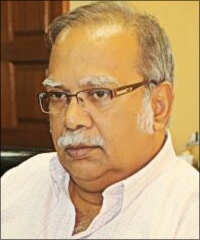
Professor P Ramasamy
“While the United Nations sponsored conventions and human rights conferences in Geneva and other places have given a voice to the Tamil Dispaora, however, unfortunately, these have become narrowly focused on human rights of the Tamils without integrating the larger and more fundamental political question,”
The UN sponsored initiatives and conferences are also important in that they obtain the support of the big powers, but then in the long run they have the tendency to divert from the primacy goal of addressing the Tamil political question, he said.
The Deputy Chief Minister is a former professor of politics at the University of Malaysia.
He participated as a member of Eezham Tamils Constitutional Affairs Committee during the internationally mediated talks between the LTTE and the GoSL and was instrumental in working out the blueprint of the proposals for an Interim Administration for the Northeast (ISGA) along with other Tamil legal experts in 2003.
Further observations from Professor Ramasamy follow:
Human rights are important, but political solution is fundamental for Eelam Tamils.
It is nearly going to be ten years after the end of war, there is little or no progress in terms of re-settling those displaced, returning lands seized by the armed forces, accounting for the thousands disappeared during the war and extending to those women who were raped.
These are human rights concerns which should be relentlessly pursued. But where is the question of political solution of Tamils?
If these human rights problems could be resolved will it mean that Tamils would cease to be problem to the Sri Lankan regime? Are these human rights issues independent of the Tamil national question or are they inextricably related?
In fact, there is little or progress on the numerous human rights matters of the Tamils in the northeast of the island.
Apart from the occasional outbursts of Sri Lankan leaders about the need to maintain the present unitary form of state and that federalism might be not conducive to the minorities, there is nothing substantial in the way of resolving the long-standing Tamil national question.
The central issue in the Tamil national liberation struggle was not just the question of human rights but the fundamental question of a political solution for Tamils in the form of separate homeland called Tamil Eelam.
The more than three-decade armed struggle waged by the Tamil Tigers ended in 2009, but the question of a political solution for the Tamils remains unresolved.
While some domestic Tamil political parties have literally sold out the interests of Tamils, the huge Tamil Diaspora wants the political question to be settle.
The phase of the armed struggle is over.
But surely there are other forms of political struggles that can be pursued to resolve the political autonomy of Tamils. Armed struggle is not the only option.
I am not suggesting that the Tamils and others who support their worthy cause abandon the pursuit of human rights, but what is important is that the pursuit of human rights be situated in the larger political context. It is not that Tamil Diaspora is not aware of this problem, but then they have be reminded of this nexus from time to time.
Whether the Tamils in the northeast accept the present unitary form of government or a federalism or even a separate state, surely, they must be given the democratic right to decide their future.
Such a right cannot be denied to Tamils because it has been extended to other nationalities especially in the developed countries.